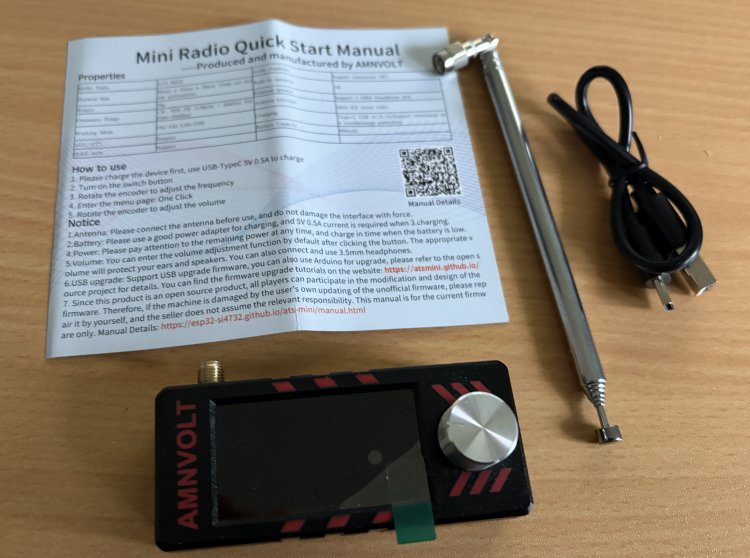
I’m always keen to play with new, cheap and portable radio technology from China, and after seeing some very positive reviews online, I picked up an AMNVOLT Mini SI4732 DSP Radio Receiver from AliExpress.
I paid just over £26 for mine, which makes it a remarkably inexpensive way of getting a compact receiver covering broadcast and amateur-radio frequencies.
Check current prices for the AMNVOLT Mini SI4732
What is the AMNVOLT Mini SI4732?
The AMNVOLT Mini is a compact DSP-based receiver built around the SI4732 chipset and an ESP32 controller.
Despite its small size, it can receive a wide range of signals including AM, FM broadcast and SSB, making it particularly interesting for radio amateurs, shortwave listeners and anyone who wants a very portable receiver.
Some of the appeal comes from the fact that the firmware can be updated, adding features and changing how the radio works.

First impressions
My first impressions were extremely positive.
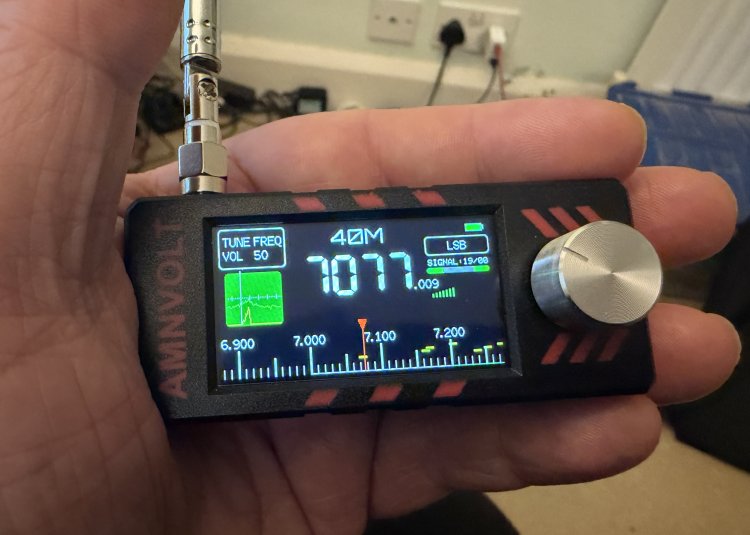
For such a small and inexpensive receiver, the display is excellent and the controls are straightforward once you’ve spent a few minutes getting used to them.
One of the first things I tried was listening to amateur radio SSB on the 40m band. For something this compact, it’s impressive to be able to put a radio in your pocket and listen to HF amateur activity without carrying a conventional communications receiver.
As with most tiny receivers, performance will depend heavily on the antenna, location and local electrical noise, but as a portable receiver and something to experiment with, there’s a lot here for the money.

Firmware
The firmware supplied with my radio was v2.33, and even the standard firmware provides a good range of features.
One of the more interesting aspects of the ATS Mini platform is that alternative firmware is available from the radio community.
A popular option is firmware developed by H. J. Berndt, which adds or improves features including:
- Waterfall and spectrum displays
- CW decoding
- FM RDS information
- Additional display and receiver options
AMNVOLT’s own current information specifically references support for the H. J. Berndt firmware on newer versions of the hardware.
Another active firmware project is ATS_MINI by G8PTN, developed specifically for the ESP32/SI4732 Mini Receiver platform.
Before installing alternative firmware, check which hardware revision of the radio you have. Different versions of the ATS Mini hardware exist, and firmware compatibility can vary.
Useful firmware links
Updating the firmware
The radio uses an ESP32 controller, so firmware can be loaded using an ESP32 flashing tool.
One convenient option is the browser-based Adafruit WebSerial ESPTool:
This allows firmware files to be uploaded to compatible ESP32 hardware directly from a supported web browser. The tool itself is still actively maintained.
Important: Before flashing anything, check the instructions supplied with the firmware and confirm that it supports your exact hardware version. It’s also sensible to keep a backup of the original firmware where possible.
Who is it for?
The ATS Mini isn’t a replacement for a full-size amateur transceiver or communications receiver, but that’s not really the point.
For a relatively small amount of money you get a pocket-sized receiver that’s useful for:
- Listening to HF amateur radio
- Shortwave listening
- FM broadcast reception
- Airband and general listening, depending on firmware and coverage
- Experimenting with antennas
- Portable radio listening
- Experimenting with alternative firmware
It’s exactly the kind of cheap radio gadget that’s fun to keep in a bag and experiment with.
Initial verdict
For around the price I paid, I’m impressed.
The combination of a compact colour display, SSB reception, wide frequency coverage and community-developed firmware makes it far more interesting than a basic pocket radio.
There are obviously limitations compared with a conventional receiver, particularly when it comes to front-end performance, antenna options and strong-signal handling, but as an inexpensive portable receiver it’s a surprisingly capable little device.
I’ll continue experimenting with mine, particularly with alternative firmware and external antennas.
Interested in amateur radio?
If listening to amateur radio on receivers like this has got you interested in getting on the air yourself, the next step is a UK amateur radio Foundation licence.
Essex Ham offers a free online Foundation training course to help newcomers prepare for the exam.
Find out about our free Foundation Online course »

I’m interested in doing the firmware update, but unfortunately my German isn’t t that good. Hope to see a translated version of your linked sites.
Marty WA7HOI