

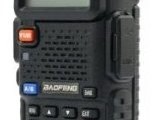
Once you’ve got your licence, one of the first purchases you’re likely to make is a handheld amateur radio.
For many new amateurs, that means a dual-band 2m/70cm handheld. Budget radios from manufacturers such as Baofeng are popular because they’re inexpensive and easy to get started with, while Yaesu, Icom and others offer more expensive alternatives.
Whichever handheld you choose, there are a few things worth understanding before you decide that your new radio “doesn’t work”.
| Want a one-page printable guide? See our Getting Started Guides |
Know the limitations of a handheld radio
A handheld is a very useful piece of amateur radio equipment, but it isn’t a complete base station in your pocket.
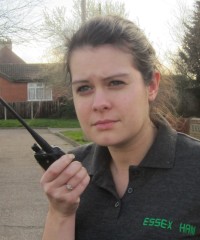
Power – Most amateur handhelds produce somewhere around 5 watts on their highest power setting. That’s enough for plenty of local contacts, but much less than a typical mobile or base radio.
Antenna – The short flexible antenna supplied with a handheld is convenient, but it’s a compromise. It lets you carry the radio around easily, but it won’t usually perform as well as a larger external antenna.
Location – On VHF and UHF, where you are can make a huge difference. A handheld used from the top of a hill may work stations many miles away, while the same radio used downstairs inside a reinforced building may struggle to hear a nearby repeater.
Receiver performance – Low-cost handhelds vary in receiver quality. In strong-signal environments they can sometimes suffer from overload or desensitisation, where powerful nearby signals make weaker signals difficult to hear.
Audio – Audio quality varies between models. If people report that your transmitted audio is quiet or muffled, first check how you’re holding the radio and where the microphone opening is. Speak across the microphone from a sensible distance rather than shouting directly into it.
We wouldn’t recommend drilling or modifying a new radio simply because somebody reports quiet audio. Try the simple things first.
How far will a 5-watt handheld reach?
This is one of the most common questions, and unfortunately there’s no fixed answer.
You may see claims such as “5 miles”, “10 miles” or “20 miles”, but VHF and UHF range depends heavily on:
- Your height above surrounding ground
- The height of the other station or repeater
- Buildings, hills and other obstructions
- Your antenna
- The other station’s antenna
- Local electrical and radio interference
From a good hilltop location with a clear path, a 5-watt handheld can cover impressive distances.
From inside a house in a dip, surrounded by buildings, its useful range may be much shorter.
So if you can hear a repeater but can’t get into it, or somebody can hear you only weakly, it doesn’t necessarily mean anything is wrong with the radio.
Antenna height often matters more than power
For 2m and 70cm, improving the antenna position is often the most effective upgrade you can make.
A handheld producing 5 watts into a rooftop antenna can easily outperform a much more powerful radio connected to a poor antenna indoors.
If you’re using the supplied rubber antenna, simply moving upstairs, going outside or walking to higher ground can make an immediate difference.
Check the squelch
Squelch mutes the background hiss when no signal is present.
If it’s set too high, weak signals may never open the receiver, so you can miss stations that are actually there.
On many radios, a relatively low squelch setting works best. The exact number varies between models, so don’t assume that “5” on one radio means the same thing as “5” on another.
If you’re trying to receive a weak station or repeater, temporarily opening the squelch completely can help you work out whether there’s a signal there.
The band may simply be quiet
One of the surprises for some newly-licensed amateurs is that buying a radio doesn’t guarantee that somebody will immediately be talking on it.
2m and 70cm activity varies enormously by location and time of day.
You might hear very little in the middle of a weekday, but hear plenty of activity during a club net or at commuting times.
If you’re unsure whether your radio is receiving properly, find out when a local net is scheduled and listen then.
Repeaters are also useful because they give you a known frequency where activity is more likely.
Can hear them, but they can’t hear me?
This is completely normal.
The station you’re listening to may be using:
- More transmit power
- A higher antenna
- A higher-gain antenna
- Better coax
- A much clearer path to your location
For example, you might be listening to someone running 25 or 50 watts into a rooftop antenna while you’re transmitting 5 watts into a small handheld antenna from indoors.
Radio paths aren’t always symmetrical either, so hearing another station doesn’t guarantee that they’ll hear you at the same strength.
Working repeaters
If you’re trying to use a repeater, the radio has to be programmed correctly.
Typically you’ll need:
- The repeater’s output frequency – the frequency you listen on
- The correct transmit offset or input frequency
- The correct CTCSS tone, where required
If any of these is wrong, you may hear the repeater perfectly well but be unable to access it.
Programming software such as CHIRP can make setting up memories easier, particularly if you have several local repeaters to enter.
Before assuming the radio is faulty, check the repeater’s current settings using a reliable repeater directory.
Check the obvious settings
It sounds basic, but a surprising number of problems come down to one setting being wrong.
- Is the volume turned up?
- Is the squelch too high?
- Is the antenna screwed on properly?
- Are you on the correct frequency?
- Are you in VFO mode or memory mode?
- Is the correct memory channel selected?
- Is the transmit power accidentally set to Low?
- Is a CTCSS or DCS receive tone muting signals?
- Is the repeater offset correct?
- Is the battery properly charged?
If you’ve been changing lots of menu settings and completely lost track, a factory reset can sometimes be the quickest way of getting back to a known starting point.
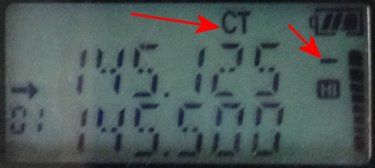
A handheld radio programmed for the GB3DA repeater
Improving the range of your handheld
If your handheld works but doesn’t reach as far as you’d like, there are several things you can try before buying another radio.
1. Change position
This costs nothing and can make the biggest difference.
Try:
- Going upstairs
- Standing near a window
- Going outside
- Moving away from buildings
- Finding higher ground
Even moving a few metres can sometimes change a weak signal noticeably.
2. Improve the handheld antenna
Most handheld antennas unscrew, allowing you to fit an alternative.
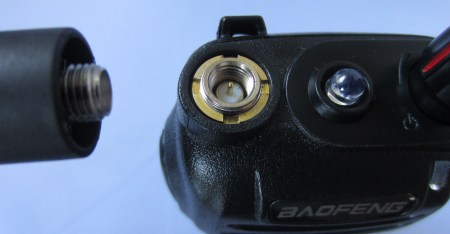
SMA antenna connection on a handheld radio
A longer or better-designed handheld antenna may improve performance, although results vary considerably.
Be careful when buying antennas because handhelds use different versions of the SMA connector. Check whether your radio uses SMA male or female before ordering.
Also be wary of very cheap antennas claiming unrealistic amounts of gain.
3. Use an external antenna
This is where you can make a much more substantial improvement.
For home use, a dual-band 2m/70cm vertical mounted outside and as high as practical is a common choice.
If an outdoor antenna isn’t possible, a loft antenna can be a useful compromise.
Popular options include:
- Dual-band collinear antennas
- Slim Jim or J-pole antennas
- Small directional Yagis
- Portable roll-up antennas
A directional Yagi can provide useful gain towards a particular station or repeater, but for general local operation a vertical omnidirectional antenna is usually more convenient.
4. Watch the coax losses
If you’re connecting a handheld to an external antenna, the coaxial cable matters – particularly on 70cm.
All coax has loss, and the loss increases with frequency and cable length.
Thin RG58 may be perfectly acceptable for a short run, but for a long feedline to a roof-mounted VHF/UHF antenna, lower-loss cable is preferable.
Don’t choose cable purely by diameter or name. Check the manufacturer’s quoted loss at the frequencies you’re actually using.
5. Try portable operation
If you can’t install a useful antenna at home, operating portable can transform your results.
Take the handheld to a hill, park or open location and see what you can hear.
A cheap radio from a good location can be far more effective than an expensive radio in a poor location.
Using a handheld in the car
A handheld will work from inside a vehicle, but the metal body of the car can shield the signal.
An external antenna mounted on the vehicle can make a substantial improvement.
Magnetic-mount antennas are popular because they don’t require a permanent installation. The coax runs into the vehicle and the magnetic base holds the antenna to a suitable metal surface.
If you’re using amateur radio while driving, make sure that operating the equipment doesn’t distract you or interfere with proper control of the vehicle.
Should I buy a bigger radio instead?
Possibly – but don’t rush.
If your problem is simply a poor antenna or poor location, replacing a 5-watt handheld with a 25 or 50-watt mobile radio may not solve the underlying problem.
A better progression for a home VHF/UHF station is often:
- Improve the antenna
- Improve its height
- Use suitable low-loss coax
- Then consider a higher-powered mobile/base radio
The antenna system is part of the station, not just an accessory.
What about cheap Baofeng handhelds?
Baofeng radios remain popular with newly-licensed amateurs because they’re inexpensive and widely available.
Models such as the Baofeng UV-5R have introduced a lot of people to amateur radio.
They aren’t perfect. More expensive radios may offer better filtering, receiver performance, build quality, documentation and support.
But a cheap handheld can still be a perfectly useful first radio, particularly if you understand its limitations and use it with a decent antenna.
The main mistake is expecting a small 5-watt handheld with a rubber antenna to perform like a 50-watt base station connected to a rooftop antenna.
Don’t judge amateur radio by one handheld
This is perhaps the most important point on the page.
If you buy a handheld, switch it on at home, hear very little and can’t reach a repeater, don’t assume that amateur radio is dead or that your licence was a waste of time.
Try a better location. Find a local net. Try an external antenna. Visit a club. Explore HF, digital modes, portable operation, satellites or one of the many other parts of the hobby.
A handheld is just one small corner of amateur radio.
Still having problems?
If you’re struggling to make your first contact, ask other amateurs for help and give as much detail as possible:
- Your radio model
- Your approximate location
- Which frequency or repeater you’re trying to use
- Your antenna
- Whether you can hear the repeater
- What happens when you transmit
See Essex Ham Help & Support for ways to get advice from the Essex Ham community.
Hopefully this guide has helped. If you’ve got any useful tips for someone getting started with their first handheld, please add them as a comment below.
Related Links
- Just got your licence? Next Steps…
- Buying radios from eBay – some advice on how to shop carefully
- Essex Ham’s Getting Started Guides
- Setting Up Your First Station
- Getting Started with Repeaters
- Connecting a handheld to a PC for programming
- Guide to using the Baofeng UV-5R

Thanks for your encouragement. Having just passed my foundation licence,( still waiting
my call sign) I was disappointed at my “silent ” icom 65 e.but clearly I need more knowledge,
to get the best from my handheld. Thanks again 73 Alan Clark.
Hi, my father was mad on short wave radio and after a struggle got his amateur license. I had to add an extra valve to his Eddystone communications receiver so he could get SSB signals. I also made many business trips to Japan and dined with one of his Ham contacts Hiko, in Nagoya. We went to his Ham radio store and I purchased a new model Icom communications receiver for him. Had to also buy a new suitcase to carry it back to Australia.
Had been meaning to get into it myself to have longer range radio for contact during my 4WD trips in the outback.
So this September I spent a weekend doing the Foundation course and theory and practical exams.
Got through easily and have call sign VK5FAAQ. Starting with a BAOFENG UV-5RIII.
Your web info is simply brilliant. J. Rory Thompson Adelaide Australia FIEAUst. CPEng.
Hi everyone.
I have been trying to but a samll handhald twoway radio, I found a link on this site for a preprogramed radio so I can monitor what is going on etc as I am taking the online course, I tried to buy a radio but the payment gateway just stopped working, now I am not able to find the link on your site, it is still avaliable if so can you give me the link or how to contact them?
Thanks
David.
Was it Prepcomms U.K.?
Hi. Looking to get my ham license. Can you advise on latest best ham handheld radios pls? Looking to spend £100 max for a pair. Thanks, Scott
Hi,
I saw your post dated Nov 2022 about the best handheld radios, I was wondering if anyone replied with ay decent advice asI have been searching for months myself, I just can’t find anything. When I think I find something half decent, I read the reviews on Amazon and it goes shot down. Any help would be gratefully appreciated.
Thanks
Paige
My first handheld was a Motorola GP640 which was about 25 quid off ebay I remember searching for weeks for the programming software but finally got the software in the end and I programmed it up on 70cms happy days. A very good radio with excellent audio quality.
I’ve never really been a fan of the Chinese radios although I do own a few Beofengs.
Is there anyone who could mentor me on a five day course to take the direct exam? If so I will travel within m25 and contribute cash accordingly.
Best regards
Gary
I’d suggest the Quansheng UV-K5 is a better option than the Baofeng these days. Very cheap in Aliexpress and the custom firewares mark it a very capable radio for the price.
alas i purchased a baofeng uv-5rc alas not listed on their site, nor would the software on baofeng for uv-5r work tried chirp could not understand all requirements as i have just passed, cannot find a simple setup programme for the uk my repeater is gb3ts tried setting it up but due to limited guide and complex guides i get lost! has anyone got a recommendation for a pre-setup handheld for us starters? not too expensive moneys now tight but a software that works would be a starter i tried chirp but was lost in all the technical jargon sorry for being thick