

Skip to content
  • Facebook
  • YouTube
  • Bluesky
  • Discord
  • X
  • Instagram
  • RSS
Essex Ham Logo

Essex Ham

Supporting Amateur Radio in Essex

Essex Ham's Foundation Online Course
  • Home
  • Get Started
    • What is Amateur Radio?
    • Become a Ham
    • Amateur Radio Explained
    • Guide for Parents
    • Amateur Radio Books
    • Common Questions
  • Advice
    • How to Become a Ham
    • Passed? Get Your Licence
    • Just Got Your Licence?
    • Your First Handheld
    • Your First Station
    • Getting Started Guides
    • Returning to the Hobby
    • Getting Started with Data
    • Downloads & Handouts
    • Your Questions (FAQ)
  • Events
    • Events Calendar
      • Calendar View
      • Poster View
      • Upcoming Field Events
      • Upcoming Training
      • Essex Field Events This Year
      • Upcoming Local Rallies
    • Next Essex Ham Events
    • Club Events List
    • Recent Events in Essex
    • Essex 2m Activity Days
    • Annual Event List
    • Latest News & Articles
  • Training
    • How to Get Started
    • Foundation Online Course
    • Training Courses in Essex
    • Other Online Courses
    • Training Videos
    • Foundation Exam Books
    • Training Material
    • Training Information
    • Essex Training Calendar
    • For Tutors
  • Clubs
    • Support for Clubs
    • Clubs in Essex
    • Resources & Downloads
    • Training Material
    • Promotional Videos
    • Essex Speakers Directory
  • About Us
    • What is Essex Ham?
    • Latest News & Articles
    • Forums
    • Videos
    • Internet Radio Stream
    • Podcast
    • Live Weather
    • Essex Ham APRS iGate
    • Essex Ham Newsletter
    • Essex Activity Map
    • About Our Site
  • Net
    • Monday Night Net Info
    • Monday Net Chatroom
    • Monday Net Reports
    • Live Audio Feed
    • Danbury Repeater GB3DA
    • Other Nets in Essex
    • Repeaters in Essex
  • Members
    • Join our Community
      • Join Essex Ham (free)
      • Essex Ham Members FAQ
    • Forums
    • Live Chatroom
    • Merchandise
    • Recommended Kit
    • Members-Only
      • Members-Only Area
      • Member Main Page
      • Email Alerts
      • Essex Ham Newsletter
      • Email Discussion Group
  • Forums / Contact Us
    • Forums
    • Email Discussion Group
    • Need some help?
    • Contact The Team
    • Our Facebook Group
    • Discussion Group List

SOTA: Summits On The Air – A Beginner’s Guide

On this page, you’ll find some basic information about SOTA – Summits On The Air – and some practical advice to help you get started as either an activator or a chaser.

What is SOTA?

SOTA Summits On The AirSummits On The Air is an amateur radio awards programme that encourages portable radio operation from qualifying hills and mountains around the world.

You don’t need to be a mountaineer to take part. If climbing hills with a radio doesn’t appeal, you can take part as a chaser, working SOTA stations from home, from your car, or while operating portable yourself.

There are qualifying SOTA summits in countries all around the world. Each summit has its own reference, such as G/SE-001, and is allocated a number of points according to the rules for that SOTA Association.

There are two main ways to take part:

  • Activator – operate an amateur radio station from a qualifying summit
  • Chaser – contact an activator from elsewhere

You can also combine the two. If you’re operating from one SOTA summit and contact someone on another summit, that’s known as a Summit-to-Summit contact.

What counts as a SOTA summit?

Not every hill automatically qualifies for SOTA. Summits are selected according to SOTA’s prominence rules and are listed by the Association responsible for that country or area.

Each qualifying summit is given a reference and a points value. Before planning an activation, check the official SOTA summit listing or mapping system to make sure that the hill is valid.

It’s also important to remember that a SOTA listing does not automatically mean that you have permission to access the land. You are responsible for checking access arrangements, local restrictions and your own safety before setting out.

Basic rules for a SOTA activation

There are detailed SOTA rules, but some of the main requirements are:

  • The operating position must be within the summit’s Activation Zone
  • The final approach to the operating position must be made without motorised transport
  • You can’t operate from, or have your station connected to, a motor vehicle
  • The station must use portable power, such as batteries or solar power
  • You must operate within the terms of your amateur radio licence
  • Contacts must be valid amateur radio QSOs with other stations
  • You need four QSOs with four different stations to claim the summit’s points

One valid QSO is enough for an activation to count as an activation in the SOTA database, but four different contacts are required if you want to claim the summit points.

Always check the current SOTA rules before an activation, particularly if you’re planning something unusual.

What bands and modes can you use?

One of the attractions of SOTA is that there isn’t a single preferred band or mode.

Activators use:

  • 2m and 70cm FM – particularly useful from summits with a good take-off
  • VHF and UHF SSB
  • HF SSB
  • CW (Morse)
  • Digital modes

On VHF and UHF, being high up can make a dramatic difference. Even a modest handheld and suitable antenna can cover surprisingly large distances from a good summit.

HF opens up the possibility of contacts across the UK, Europe and much further afield.

How much power do you need?

Not much.

Many SOTA activators deliberately use low-power radios because they’re smaller, lighter and consume less battery power. Five or ten watts can be remarkably effective from a good location, particularly on HF or using CW.

You can of course use the power permitted by your amateur radio licence, but carrying a large battery and high-powered radio up a hill isn’t always particularly appealing.

SOTA is often a good demonstration of the old amateur radio principle that location and antenna can matter more than transmit power.

What radio do you need for SOTA?

There isn’t one ideal SOTA radio. Your choice depends on what bands and modes you want to use, how far you’re walking and how much equipment you’re prepared to carry.

Popular options include:

  • A lightweight VHF/UHF handheld for FM operation
  • A compact HF QRP transceiver
  • A portable all-band, all-mode radio covering HF, VHF and UHF

The classic Yaesu FT-817 became very popular with SOTA operators because it combined HF, VHF and UHF in a small portable radio. It has now been discontinued, but remains widely used and available second-hand, and there are plenty of newer portable radios offering similar capabilities.
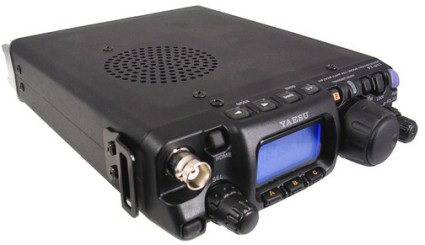
Yaesu FT-817 portable amateur radio used for SOTA

The Yaesu FT-817 became a popular radio with SOTA activators

What antenna should I use?

The antenna depends largely on which band you’re using.

VHF and UHF

A handheld with its standard rubber antenna may work from a good summit, but an improved antenna can make a big difference.

Popular portable choices include:

  • A lightweight beam such as a SOTA Beam
  • A portable Slim Jim or roll-up antenna
  • A small vertical antenna

A directional beam can be particularly effective on 2m SSB or when you’re trying to reach more distant stations.

HF

HF antennas used for SOTA are usually lightweight wire designs that can be carried in a backpack.

Common options include:

  • Linked dipoles
  • End-fed antennas
  • Simple dipoles
  • Vertical wires
  • Loops

Telescopic fishing poles or lightweight fibreglass masts are often used to support the wire.

Power for a SOTA station

Your station must use a portable power source.

Rechargeable lithium batteries are now commonly used because they’re much lighter than the old sealed lead-acid batteries that were once popular with portable operators.

The amount of battery capacity you need depends on the radio, transmit power and how long you’re planning to stay on the summit.

Remember that cold weather can reduce battery performance, so allow some spare capacity for winter activations.

What else should you take?

The radio is only one part of a SOTA activation. You’re heading outdoors, sometimes into exposed or remote terrain, so basic hill safety is more important than making radio contacts.

Depending on the location and conditions, useful equipment may include:

  • Phone and/or GPS
  • Map and compass
  • Suitable footwear
  • Waterproof and warm clothing
  • Food and water
  • First aid kit
  • Torch or head torch
  • Spare batteries
  • Notebook and pen
  • Something waterproof to protect the radio and log

Don’t rely entirely on mobile phone coverage or Internet access. Some excellent radio locations have remarkably poor mobile coverage.

What is SOTAwatch?

SOTAwatch is the live activity part of SOTA and is extremely useful to both activators and chasers.

There are two important types of entry:

  • Alert – tells chasers that you’re planning to activate a particular summit at roughly a particular time
  • Spot – tells people that an activator is actually on the air, together with the frequency and mode being used

Before heading out, many activators put an alert onto SOTAwatch. Once they’re operating, they can post a spot themselves, or another amateur may spot them.

For chasers, SOTAwatch is one of the easiest ways of finding SOTA stations that are currently active.

Visit SOTAwatch »

Logging your SOTA contacts

After an activation, upload your contacts to the SOTA Database. Chasers can also log the SOTA stations that they’ve worked.

The database keeps track of your score and progress towards the various SOTA awards.

There is no membership fee simply to take part in SOTA. Registration for the online facilities is free.

SOTA awards

SOTA has awards for both activators and chasers.

The best-known include:

  • Mountain Goat – awarded to an activator reaching 1,000 points
  • Shack Sloth – awarded to a chaser reaching 1,000 points
  • SOTA Uniques – based on the number of different qualifying summits activated or chased

There are also certificates at various points levels, and many operators simply enjoy building up their score without worrying too much about the awards.

How to make your first SOTA activation

Your first activation doesn’t need to involve a major expedition.

A sensible approach is:

  1. Find an easy qualifying summit using the SOTA website
  2. Check access, parking, weather and walking conditions
  3. Choose a band and take a simple portable radio setup
  4. Add an Alert to SOTAwatch before you leave
  5. Reach the summit and set up safely within the Activation Zone
  6. Find a clear frequency and start calling CQ SOTA
  7. Try to work at least four different stations
  8. Log your contacts and upload them to the SOTA Database afterwards

If you’re starting on 2m FM, you can keep things particularly simple. A handheld, spare battery, suitable antenna and notebook may be all the radio equipment you need for a straightforward local summit.

Don’t fancy climbing hills? Become a SOTA chaser

You don’t have to leave the shack to take part.

Use SOTAwatch to see which activators are on the air, tune to their frequency and try to make contact.

Chasers collect points too, and because activators often operate from excellent radio locations, they can sometimes be surprisingly easy to hear.

Chasing is also an excellent way to learn how SOTA works before attempting your own activation.

Video: SOTA Explained

If you’re looking to find out more about SOTA, take a look at the first episode of TX Factor. From about 12 minutes into the programme there’s a feature explaining SOTA and showing a typical activation.

Handy SOTA links

  • Official Summits On The Air website
  • SOTAwatch – current activations, alerts and spots
  • SOTABeams – portable antennas and accessories

New to amateur radio?

If the idea of getting outdoors with a radio appeals but you don’t yet have an amateur radio licence, the UK Foundation licence is the usual starting point.

Essex Ham offers a FREE online Foundation training course to help you get started.

Want more beginner guides? See our Getting Started Guides

Thanks to Annie M6NHB and Nev M6FNR for asking about SOTA, and James 2E1GUA for suggesting this page.

Comment (1) on “SOTA: Summits On The Air – A Beginner’s Guide”

  1. Mike KB7YVM says:
    26 July 2022 at 03:35

    How do you communicate with other hams that you are planning a SOTA event? We do numerous peaks here in Central Oregon. How do you communicate location, time, frequency etc.?

    Reply

Leave a Reply Cancel reply

Your email address will not be published. Required fields are marked *


Essex Ham Member Login

Forgot?  Register
More on MeshCore

Essex Ham Newslettter:

Looking for general updates on amateur radio? Join our free newsletter:

Recent Essex Ham Posts

  • Monday Night Net – AI Summary 17 Nov 2025
  • Monday Night Net – AI Summary 10 Nov 2025
  • Monday Night Net – AI Summary 03 Nov 2025
  • Monday Night Net – AI Summary 27 Oct 2025

Recent Forum Topics

  • It’s been a while… by G4USL
    1 hour, 58 minutes ago
  • Recommendations (especially antenna installers) by M7VSX
    5 days, 13 hours ago
  • Call-sign change by radioman
    1 week, 4 days ago

Callsign:

Upcoming Local Events

  • National Hamfest on 25 September 2026 09:30
  • CARS: Monthly Club Night Placeholder on 6 October 2026 19:30
  • SEARS: Monthly Club Night Placeholder on 8 October 2026 19:30
  • RSGB Convention 2026 on 10 October 2026 09:00
Essex Ham recommends:

Realtek USB SDR

  • Getting started? Baofeng UV-5R 2m/70cm handheld: £30
  • Listen to the bands on your computer: USB Software Defined Radio Dongle: £10 (More)
  • MeshCore Networking: Meshcore Heltec V3 (More)

Heltec v3 Meshcore
More Recommendations

Recent Comments

  • jonathan on Licence Changes – Ofcom Statement December 2023
  • jonathan on Licence Changes – Ofcom Statement December 2023
  • jonathan on Licence Changes – Ofcom Statement December 2023

Show Your Support for Essex Ham

Free Training. Free Content. Free Help. No Membership Fees. Want to say thanks? PayPal or Coffee donations are always appreciated.
Make a donation

Copyright © 2011-2026 Essex Ham. Home | About This Site | Site Terms & Privacy | GDPR Statement

Powered by PressBook WordPress theme

This site uses cookies to enhance your browsing experience, serve personalised ads or content, and analyze our traffic. By clicking “Accept All”, you consent to our use of cookies, however you can select "Cookie Settings" to control your consent. View Terms & Privacy Policy
Cookie SettingsAccept All
Manage consent

Privacy Overview

This website uses cookies to improve your experience while you navigate through the website. Out of these, the cookies that are categorized as necessary are stored on your browser as they are essential for the working of basic functionalities of the website. We also use third-party cookies that help us analyze and understand how you use this website. These cookies will be stored in your browser only with your consent. You also have the option to opt-out of these cookies. But opting out of some of these cookies may affect your browsing experience.
Necessary
Always Enabled
Necessary cookies are absolutely essential for the website to function properly. These cookies ensure basic functionalities and security features of the website, anonymously.
CookieDurationDescription
apbct_cookies_testsessionCleanTalk sets this cookie to prevent spam on comments and forms and act as a complete anti-spam solution and firewall for the site.
apbct_headlesssessionCleantalk set this cookie to detect spam and improve the website's security.
apbct_page_hitssessionCleanTalk sets this cookie to prevent spam on comments and forms and act as a complete anti-spam solution and firewall for the site.
apbct_prev_referersessionFunctional cookie placed by CleanTalk Spam Protect to store referring IDs and prevent unauthorized spam from being sent from the website.
apbct_site_landing_tssessionCleanTalk sets this cookie to prevent spam on comments and forms and act as a complete anti-spam solution and firewall for the site.
apbct_site_referer3 daysThis cookie is placed by CleanTalk Spam Protect to prevent spam and to store the referrer page address which led the user to the website.
apbct_timestampsessionCleanTalk sets this cookie to prevent spam on comments and forms and act as a complete anti-spam solution and firewall for the site.
apbct_urls3 daysThis cookie is placed by CleanTalk Spam Protect to prevent spam and to store the addresses (urls) visited on the website.
cookielawinfo-checkbox-advertisement1 yearSet by the GDPR Cookie Consent plugin, this cookie is used to record the user consent for the cookies in the "Advertisement" category .
cookielawinfo-checkbox-analytics11 monthsThis cookie is set by GDPR Cookie Consent plugin. The cookie is used to store the user consent for the cookies in the category "Analytics".
cookielawinfo-checkbox-functional11 monthsThe cookie is set by GDPR cookie consent to record the user consent for the cookies in the category "Functional".
cookielawinfo-checkbox-necessary11 monthsThis cookie is set by GDPR Cookie Consent plugin. The cookies is used to store the user consent for the cookies in the category "Necessary".
cookielawinfo-checkbox-others11 monthsThis cookie is set by GDPR Cookie Consent plugin. The cookie is used to store the user consent for the cookies in the category "Other.
cookielawinfo-checkbox-performance11 monthsThis cookie is set by GDPR Cookie Consent plugin. The cookie is used to store the user consent for the cookies in the category "Performance".
CookieLawInfoConsent1 yearRecords the default button state of the corresponding category & the status of CCPA. It works only in coordination with the primary cookie.
ct_checkjssessionCleanTalk–Used to prevent spam on our comments and forms and acts as a complete anti-spam solution and firewall for this site.
ct_fkp_timestampsessionCleanTalk sets this cookie to prevent spam on the site's comments/forms, and to act as a complete anti-spam solution and firewall for the site.
ct_has_scrolledsessionCleanTalk sets this cookie to store dynamic variables from the browser.
ct_pointer_datasessionCleanTalk sets this cookie to prevent spam on the site's comments/forms, and to act as a complete anti-spam solution and firewall for the site.
ct_ps_timestampsessionCleanTalk sets this cookie to prevent spam on the site's comments/forms, and to act as a complete anti-spam solution and firewall for the site.
ct_sfw_pass_key1 monthCleanTalk sets this cookie to prevent spam on comments and forms and act as a complete anti-spam solution and firewall for the site.
ct_timezonesessionCleanTalk–Used to prevent spam on our comments and forms and acts as a complete anti-spam solution and firewall for this site.
sessionIdsessionThis cookie, set by Microsoft, is used by the website to store the user's session ID and is sent with each request to the ASP.NET application.
viewed_cookie_policy11 monthsThe cookie is set by the GDPR Cookie Consent plugin and is used to store whether or not user has consented to the use of cookies. It does not store any personal data.
Functional
Functional cookies help to perform certain functionalities like sharing the content of the website on social media platforms, collect feedbacks, and other third-party features.
CookieDurationDescription
apbct_pixel_urlsessionCleanTalk set this cookie to provide spam protection.
__cf_bm30 minutesThis cookie, set by Cloudflare, is used to support Cloudflare Bot Management.
Performance
Performance cookies are used to understand and analyze the key performance indexes of the website which helps in delivering a better user experience for the visitors.
CookieDurationDescription
_gat1 minuteThis cookie is installed by Google Universal Analytics to restrain request rate and thus limit the collection of data on high traffic sites. For details of this cookie, go to Google's Privacy & Terms site
Analytics
Analytical cookies are used to understand how visitors interact with the website. These cookies help provide information on metrics the number of visitors, bounce rate, traffic source, etc.
CookieDurationDescription
CONSENT2 yearsYouTube sets this cookie via embedded youtube-videos and registers anonymous statistical data.
ct_screen_infosessionCleanTalk sets this cookie to complete an anti-spam solution and firewall for the website, preventing spam from appearing in comments and forms.
UID1 year 1 month 4 daysScorecard Research sets this cookie for browser behaviour research.
_ga1 year 1 month 4 daysThe _ga cookie, installed by Google Analytics, calculates visitor, session and campaign data and also keeps track of site usage for the site's analytics report. The cookie stores information anonymously and assigns a randomly generated number to recognize unique visitors. For details of this cookie, go to Google's Privacy & Terms site
_gat_gtag_UA_*1 minuteSet by Google to distinguish users. For details of this cookie, go to Google's Privacy & Terms site
_gid1 dayInstalled by Google Analytics, _gid cookie stores information on how visitors use a website, while also creating an analytics report of the website's performance. Some of the data that are collected include the number of visitors, their source, and the pages they visit anonymously. For details of this cookie, go to Google's Privacy & Terms site
__gads1 year 24 daysThe __gads cookie, set by Google, is stored under DoubleClick domain and tracks the number of times users see an advert, measures the success of the campaign and calculates its revenue. This cookie can only be read from the domain they are set on and will not track any data while browsing through other sites. For details of this cookie, go to Google's Privacy & Terms site
Advertisement
Advertisement cookies are used to provide visitors with relevant ads and marketing campaigns. These cookies track visitors across websites and collect information to provide customized ads.
CookieDurationDescription
DSID1 hourThis cookie is set by DoubleClick to note the user's specific user identity. It contains a hashed/encrypted unique ID.
ebaysessionThe domain of this cookie is owned by Ebay. This cookie is used for targeting and advertising purpose.
IDE1 year 24 daysGoogle DoubleClick IDE cookies are used to store information about how the user uses the website to present them with relevant ads and according to the user profile.
mc1 year 1 monthQuantserve sets the mc cookie to anonymously track user behaviour on the website.
test_cookie15 minutesThe test_cookie is set by doubleclick.net and is used to determine if the user's browser supports cookies.
VISITOR_INFO1_LIVE5 months 27 daysA cookie set by YouTube to measure bandwidth that determines whether the user gets the new or old player interface.
YSCsessionYSC cookie is set by Youtube and is used to track the views of embedded videos on Youtube pages.
yt-remote-connected-devicesneverYouTube sets this cookie to store the video preferences of the user using embedded YouTube video.
yt-remote-device-idneverYouTube sets this cookie to store the video preferences of the user using embedded YouTube video.
yt.innertube::nextIdneverThis cookie, set by YouTube, registers a unique ID to store data on what videos from YouTube the user has seen.
yt.innertube::requestsneverThis cookie, set by YouTube, registers a unique ID to store data on what videos from YouTube the user has seen.
__gpi1 year 24 daysGoogle Ads Service uses this cookie to collect information about from multiple websites for retargeting ads. For details of this cookie, go to Google's Privacy & Terms site
__qcaneverThe __qca cookie is associated with Quantcast. This anonymous data helps us to better understand users' needs and customize the website accordingly.
Others
Other uncategorized cookies are those that are being analyzed and have not been classified into a category as yet.
CookieDurationDescription
DEVICE_INFO5 months 27 daysNo description
dp12 yearsNo description available.
nonsession2 yearsNo description available.
rtid14 years 10 months 2 days 1 hourDescription unavailable.
ssessionNo description
slimstat_tracking_code1 monthNo description available.
SAVE & ACCEPT
Powered by CookieYes Logo