

If you have a radio that can handle SSB on 2m, why not try the monthly 2m contest and see how far you can get? Thanks to Essex Ham member and Monday Night Net regular Terry G3VFC for the following guide:
Break out of the 20 mile QSO limit of 2m FM…
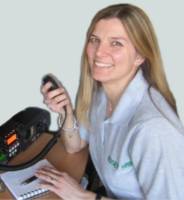 Try SSB!– You can routinely get out to 100 miles and more, often from Kent to Birmingham, Manchester, Scotland, Ireland, Isle of Man – and Europe…
Try listening to a contest in full swing: you will need an SSB-capable rig, a horizontally-polarised aerial (a horizontal dipole is much better than a colinear or other vertical aerial) and maybe a rotator, although pointing the aerial to pick up stations the west-northwest from Kent/Essex will suffice to get results.
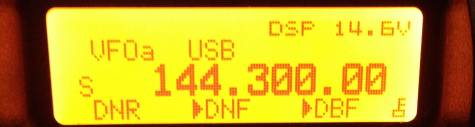
Listen 144.300, and within 100KHz of that calling frequency – although in contests the calling frequency itself is never used.
Monthly Contests
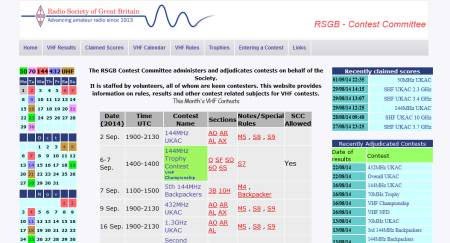
There’s a 2m contest at 20:30h on every first Tuesday of the month. Other Tuesdays have contests on other VHF/UHF/SHF bands – see the Calendar on the RSGB VHF Contest Committee website and the rules and other details (e.g. how to score points) can be found there too. Also information about other contests at other times.
Listen to a few contacts – they are short, comprising a report (59, or whatever signal strength is actually arriving at the aerial), a serial number (normally given as three digits, starting at 001 and incrementing by one for each subsequent QSO) and their QRA Locator.
The QRA Locator for the major part of Essex is likely to be JO01 followed by two letters. You can most easily get your own locator from aprs.fi – put the cursor over your location and the lat.long and QRA Locator all appear at the top left of the map. Example: Basildon is JO01FN.
Then try calling a strong station who is calling CQ Contest (or QRZ?). Have your report, serial number and QRA Locator ready to give preferably in that order. No other detail is required.
Do it again with another station… and another…
Try listening for weaker stations – and calling them. The range you get will amaze you if you’ve only been on FM so far. Some signals are so weak it can take five or ten minutes of repeating details to complete the contact – but the elation of beating the noise is definitely worth working for: so are the points!
You will get better with practice: initially I was pleased with working 10 stations between 20:00 – 22:30. Nowadays less than 30 is disappointing (but it happens…) covering big chunks of the UK. Some good operators with good stations work well over a hundred!
Submitting Results
Ideally you will make a log of stations worked with all the details you have exchanged, and you might even submit an entry to www.rsgbcc.org/vhf/ – This will most likely need some guidance from someone who has done it before – but such a person will be only too pleased to give that help.
The log can be done on paper, but that will need to be transferred to the website using the built-in log-generator. A better solution (when you get lots of QSOs) is to use a computer to originate the log in the first place: Minos is one suitable programme for the job – again a friendly local will get you up and running quite quickly.
There is a time-limit of one week to submit an entry to the Tuesday Night contest – and the result is published a week later. In any case, you can improve your VHF range and operating skill by playing this game – and the improvement over the months is measurable. You can also compete against a friend – who can work most stations, over what distance, covering how much of the country? One whole load of fun…
73… Terry G3VFC
Thanks to Terry for the submission – Why not give it a try and see how far your 2m signal will take you… a lot more than “just beyond line-of-sight” that we teach on Foundation!!

Did anyone listen to the UKAC 2m SSB contest on Tuesday 2nd September? The band was alive with stations working each other one end of the UK to the other. Some stations worked around 200 others inside the two and a half hours, with many contacts well over 500 miles distance. How those logging the contacts coped I can only guess!
70cms next Tuesday: have a go – have some fun.
Terry – G3VFC
http://www.rsgbcc.org/cgi-bin/claim.pl?Contest=144MHz%20UKAC&year=2014
I have just installed a yagi horizontal for 2 mtrs very little activity called on 144.300 with very little activity I am think I will forget SSB 2 meters on turn my antenna vertical. I live in Brighton but no activity in this mode, very disappointed with this exersize. any comments?
was this me, worked Hereford from Brighton my best distance
I tried the UKAC on 144 MHz for the first time last night. I only managed 8 contacts with the best being 155km away. I just have a halo folded dipole in the loft at the moment which should be fairly omnidirectional? I was thinking of installing a Yagi so that it is fixed covering as much of the UK as possible, beam width is around 60deg? I’m in Bristol so will probably have to exclude the SW and SE but will this likely improve my QSO number? I guess eventually I will get a rotator but that puts the cost up considerably. Will having the antenna mounted externally also make a big difference?
Replace the Halo with a centre fed wire dipole. They are very easy to fabricate.
You will need a length of coax with PL259 plug for your rig, a electrical terminal block strip and about 6 to 8 metres of electrical wire.
Measure out the each wire to an odd multiple of 1/4 wave lengths.
1 x 1/4 wave = A 1/2 wave dipole with 3 dB gain lobes at right angles to the wire.
3 x 1/4 waves = A 1 1/2 wave dipole with 4 x 6.14 dB gain lobes at 43 degrees off of the ends of the wire in addition to 3dB lobes at right angles to the wire.
5 x 1/4 waves = A 2 1/2 wave dipole with 4 x 9 dB lobes at 30 degrees off of the ends of the wire with 6 x 3dB lobes at various angles along the sides of the wire.
The number of 3 dB side lobes increase by 4 for every full wave that the wire is extended. Also the 4 x end lobe gain increases by 3dB for every full wave that the wire is extended, with the angle along the wire’s axis decreasing at the same time.
Very long (in wave lengths) wire antennae are virtually omni directional.
Attach the wire into the terminal block, along with the coax to the rig. If the wire dipole is more than 1 1/2 wave in total, measure out a 1/4 wave of wire and attach it into the same terminal block side as the “live” element. Let this additional wire hang in a loose U shape under the “live” antenna wire, with one end touching but insulated from the “live” antenna wire so that it can be slid along for SWR tuning. For every full wave over the basic 1/2 wave centre fed dipole, the impedance decreases. The 1/4 wave sliding U wire is used to fettle the impedance back to 50 ohms (it’s a very old trick). Another very old trick is to have a 1/8 wave stub of coax attached into the terminal block, with the rig coax and gradually trim it back until the SWR drops to an acceptable level.
For hanging the wire dipole up outside, attach terminal blocks at either end of the wire, with an empty terminals included and attach securing wire through the empty terminals so as to be electrically isolated for the antenna.
Is it just me? Most of the new modern 2m/70cms rigs for sale currently only appear to be FM. Does anyone here have any 2m/70cms multi-mode recommendations?
DE G7HJG Asking the same question
Wow nearly a year ago ! So sad isn’t it … but you do seem to need a shack-in-a-box type rig these days which are very expensive but have SSB on all bands. I’m lusting after an ic-705 but at the moment have an old ft-818 which is a love/hate relationship. Love the rig in use, hate the vfo dial and menu system :( did you find something that worked for you ?
I’ve run a Mizuho SB-2M SSB / CW only rig since the 1980’s. Despite it only having 500mW CW and 1W PEP SSB, I’ve managed to reach Majorca using a 11.5 x wave centre fed long wire dipole, when out portable in the hills of Dorset.
Back home, it reaches from Poole as far as Southampton and I’ve had a QSO with a fellow Mizuho SB-2M user in Portsmouth, with the assistance of my 9 element Yagi.
I believe that it is better to have separate 2 metre FM and SSB rigs plus dedicated antenna systems rather than use a multimode listening in one mode at a time. This goes for my operating on 4 metres, 6 metres and 10 metres.
1980’s SSB only 2 metre rigs do appear on E-Bay, from time to time and can be less than £60. They tend to have superior sensitivity and selectivity than multimode rigs, which is why I prefer them.